
As geopolitical tensions between Iran and the United States continue to simmer, the international community watches closely. Recent developments highlight a complex and volatile dynamic, marked by former President Trump's aggressive rhetoric and Iran's strategic decisions, including the reopening of its airspace. The situation underscores uncertainty in Middle Eastern diplomacy and global security concerns.
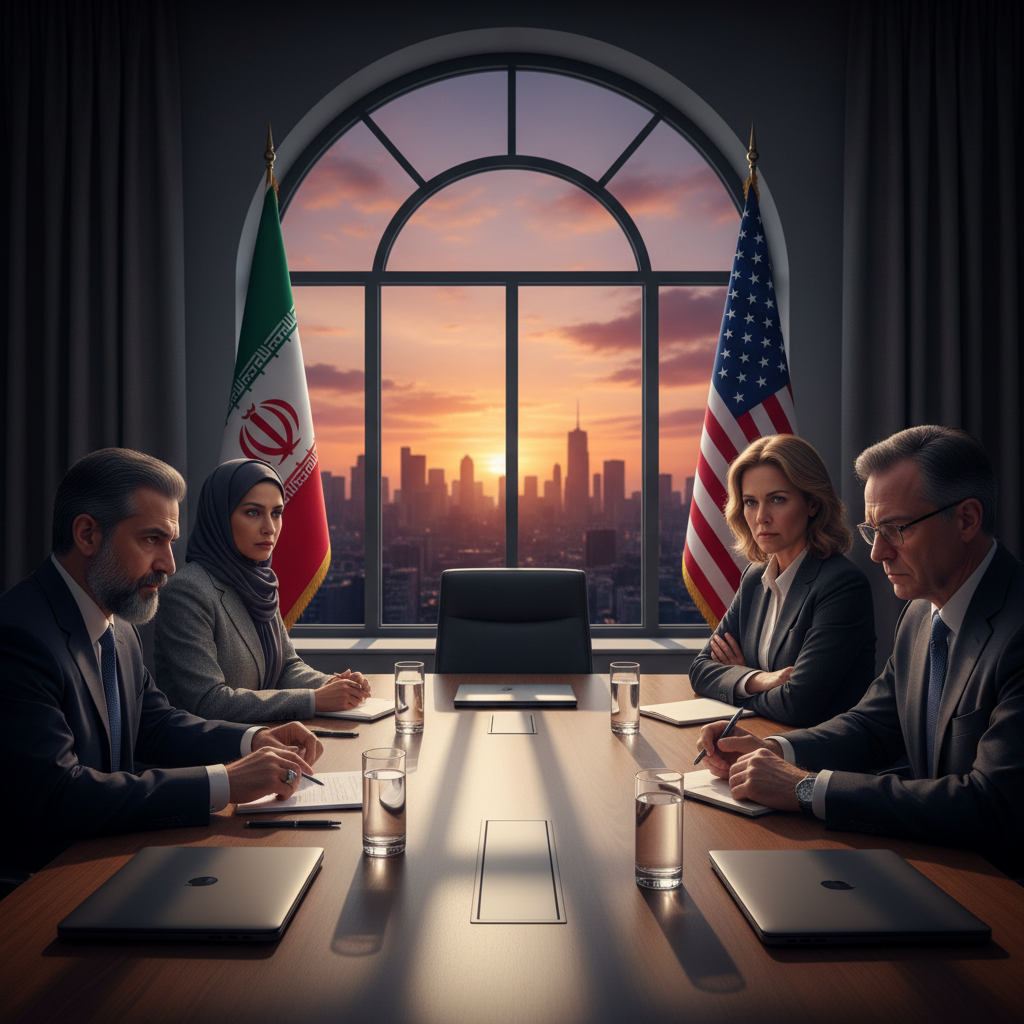
The backdrop of this prolonged tension involves decades of fraught relations between the US and Iran, stemming from issues such as nuclear ambitions, regional influence, and economic sanctions. Recently, the dialogue between the two nations has been further strained by heightened public threats and symbolic gestures from both sides.
One of the central points of concern is the impact of Trump's threats, which have added fuel to already heightened anxieties. His direct confrontations and warnings about the consequences Iran might face have placed additional pressure on Tehran's government. These utterances contribute to an atmosphere where diplomatic solutions become increasingly elusive, and military posturing gains prominence.
Meanwhile, Tehran's decision to reopen its airspace marks a significant development in this ongoing saga. After a period of closure intended to assert control and respond to perceived threats, reopening the airspace can be interpreted as a calculated move to ease tensions or assert sovereignty in a show of strength. The reopening allows for resumed commercial flights and military passage, signaling a shift in Iran’s engagement with international and regional actors.
Understanding the implications of this reopening is crucial for grasping the broader strategic calculations of Iran. It affects not only the movement of goods and people but also military strategy, since airspace control is essential in any conflict scenario. This move could be seen as a step towards stabilizing regional interactions or possibly as a way to recalibrate Iran’s defensive posture amid ongoing, unpredictable provocations.
Analysts emphasize that while rhetoric remains heating, the realities on the ground—such as airspace management and diplomatic maneuvering—suggest a complex dance of power and negotiation. Both Tehran and Washington appear engaged in a high-stakes game, balancing assertiveness with cautious engagement to avoid a full-blown conflict.
Economic sanctions imposed by the US continue to weigh heavily on Iran’s economy, influencing governmental decisions and public sentiment. These sanctions play a key role in shaping Iran’s foreign policy and its strategic choices, including how it responds to external threats and manages internal pressures. The reopening of the airspace might also reflect economic motivations, enabling better trade routes and signaling a willingness to re-engage under favorable conditions.
From the US perspective, maintaining a tough stance against Iran aims to curb what Washington sees as destabilizing activities in the Middle East. However, the challenge for American policymakers is to calibrate responses that deter aggression without escalating tensions into open conflict, especially in a region already embroiled in multiple crises.
International reactions to these developments vary, with allies and rivals closely monitoring each move. Countries within the Gulf Cooperation Council and beyond are particularly attentive, given their geopolitical interests and security concerns linked to Iran-US dynamics. Multilateral diplomacy continues to push for dialogue and conflict resolution, although progress remains slow and uncertain.
The media coverage of the Iran-US tension highlights the continuing narrative of mistrust and confrontation but also occasional diplomatic overtures. Public opinion worldwide is shaped by these portrayals, influencing political calculations on both sides. The interplay of domestic politics in Iran and the US also affects the trajectory of this confrontation, with leaders balancing nationalistic pressures and international expectations.
Observers note that the reopening of Iranian airspace could pave the way for further communication channels to open, potentially softening hostilities if managed diplomatically. Conversely, if provocations continue unabated, the tensions could escalate, leading to dangerous military encounters or broader conflicts involving regional partners.
Security experts urge cautious monitoring and increased diplomatic engagement, emphasizing the importance of avoiding miscalculations that could spiral out of control. Confidence-building measures and mutual respect for sovereignty could form a basis for de-escalating the ongoing tensions.
The complex Iran-US relationship reflects broader themes in international relations — sovereignty, regional influence, security, and global strategic interests. Each episode in the ongoing saga offers insights into how power, diplomacy, and rhetoric intersect to shape global peace and conflict.
In summary, the current status of Iran-US relations is characterized by fragile tension with significant implications. Trump's threats have exacerbated concerns, while Tehran’s reopening of its airspace presents nuanced possibilities for either escalation or dialogue. The international community remains vigilant as these two adversaries navigate a challenging and uncertain path.
Continued coverage and analysis are essential for understanding how this situation evolves and what it means for global stability. Stakeholders on all sides must grapple with the dual pressures of security and diplomacy to avoid a breakdown that could have severe regional and international consequences.
The coming weeks and months will be crucial in determining whether the tension between Iran and the US shifts towards a more stable coexistence or deteriorates into open conflict. Monitoring live developments offers insight into this dynamic and underscores the importance of measured responses in one of the world's most sensitive geopolitical arenas.



0 Comments